More consumers and businesses now look for sustainable laundry solutions. Eco-friendly detergents can reduce environmental impact, improve safety for sensitive skin, and align with corporate social responsibility goals. Below, I’ll explore different types of eco-friendly laundry products—bar soap, powder, sheets, and strips—along with brand examples, their pros, cons, and a quick summary.
1. Eco-Friendly Laundry Soap
Example Brand: Dr. Bronner’s Pure-Castile Bar Soap
Product/Brand Introduction
Dr. Bronner’s is known for its organic and fair-trade Castile soap. While they offer liquid soaps, the Eco-Friendly Laundry Soap can double as a gentle laundry option when grated or dissolved in water.

Pros
- Made with organic oils and without synthetic preservatives.
- Biodegradable, suitable for septic systems.
- Multi-purpose: Can be used for hands, body, and laundry.
- Minimal packaging reduces waste.
Cons
- Requires effort to grate or pre-dissolve before use.
- Not specifically formulated for heavy-duty stains.
- Hard water areas may need additional boosters (e.g., washing soda).
Summary
Laundry soap is a versatile option for small-scale or low-soil loads, especially for those seeking plastic-free solutions. It’s well-suited for boutique laundries or zero-waste shops catering to eco-conscious customers.
B2B Note (Optional)
Retailers can offer Eco-friendly laundry soap as a low-cost, minimal-packaging alternative. This meets the demand for zero-waste and natural cleaning solutions.
2. Eco-Friendly Laundry Powder
Example Brand: Biokleen Free & Clear Powder
Product/Brand Introduction
Biokleen’s powder is formulated with plant-based surfactants. It’s free from phosphates, chlorine, and artificial fragrances, making it an appealing choice for both households and commercial settings aiming for sustainability.

Pros
- Concentrated formula requires less product per load.
- Lacks harsh chemicals, reducing the risk of skin irritation.
- Cardboard boxes are typically recyclable, offering more eco-friendly packaging.
Cons
- Powders can clump in humid areas if not stored properly.
- May need warm or hot water to fully dissolve, depending on water hardness.
- Heavier shipping weight than sheets or strips.
Summary
Eco-friendly powders remain a popular choice for those preferring a classic detergent format without the plastic jug. Proper storage and water temperature adjustments can address clumping or dissolving challenges.
B2B Note (Optional)
Distributors can highlight powder detergents as cost-effective and easily scalable solutions, often available in bulk packaging for commercial use.
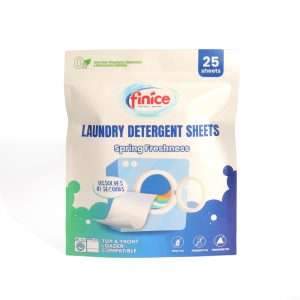
3. Eco-Friendly Laundry Sheets
Example Brand: Earth Breeze Eco Sheets
Product/Brand Introduction
Laundry sheets are ultra-thin, pre-measured strips of detergent. Earth Breeze is well-known for minimal packaging and a compostable envelope. The sheets dissolve quickly in both hot and cold water.

Pros
- Highly compact, reducing shipping costs and storage space.
- Pre-measured format prevents overuse.
- Biodegradable materials and lightweight packaging.
Cons
- Some users miss the “familiar” feel of powder or liquid.
- Scent options can be limited.
Summary
Laundry sheets are ideal for reducing plastic waste and shipping emissions. Their simplicity appeals to on-the-go consumers and businesses wanting to minimize environmental footprints.
B2B Note (Optional)
Hotels, laundromats, and retailers can offer laundry sheets to reduce storage demands. The compact format is especially useful for e-commerce businesses aiming to cut shipping costs.
4. Eco-Friendly Laundry Strips
Example Brand: Tru Earth Eco-Strips
Product/Brand Introduction
Similar to sheets, Tru Earth’s detergent strips come in water-soluble, pre-measured sizes. They are well-known for their zero-waste approach and reduced carbon footprint in shipping.
Pros
- Effective in both cold and hot water.
- Compact packaging significantly cuts plastic usage.
- Easy to portion correctly for each load.
Cons
- Some consumers find the cost higher than mainstream detergents.
- Limited scent or variety of specialized formulas (e.g., color brightening).
- Bulk orders can still be expensive compared to powder-based solutions.
Summary
Laundry strips are a standout for lightweight, space-saving detergent solutions that align with many companies’ sustainability goals. With flexible subscriptions and global availability, they resonate with both eco-conscious consumers and forward-thinking businesses.
B2B Note (Optional)
Offering private label laundry strips can differentiate a retailer’s or distributor’s product line. The strips’ strong eco-friendly narrative boosts brand reputation.
Final Thoughts
Eco-friendly laundry detergents come in different forms—bar soap, powder, sheets, and strips—each catering to specific needs and preferences. While bar soaps and powders provide a familiar feel, sheets and strips excel in portability and reduced carbon footprint. When selecting a solution, consider the following:
- Consumer Base: Are your customers seeking zero-waste packaging, hypoallergenic formulas, or cost-effective bulk options?
- Climate & Water Conditions: Certain regions need more robust stain removal or additional boosters for hard water.
- Regulations & Certifications: Labels like USDA Organic, EcoLogo, or EWG Verified™ can bolster market trust, especially in B2B partnerships.
- Packaging & Storage: Factor in shipping logistics, shelf life, and storage conditions for powders or soaps.
Ultimately, the best eco-friendly detergent for a B2B client depends on balancing environmental impact, performance, and budget. By offering a diverse range—from bar soaps to detergent strips—you can meet the evolving demands of an increasingly eco-conscious market.