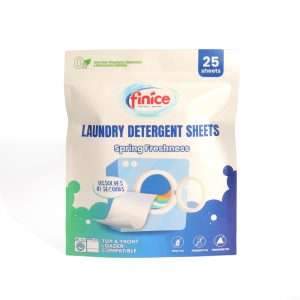
A laundry sheet that has little noticeable odor is not automatically fragrance-free. For a private label buyer, the label decision should start with the formulation and supporting information, not only a smell test.
The practical goal is to make the product specification, sample approval, carton wording and online listing tell the same story. That matters especially when a range includes both fragranced and fragrance-free options.

Separate fragrance-free from unscented
The EPA’s Safer Choice fragrance-free fact sheet distinguishes products without fragrance or masking scents from unscented products, which may use ingredients to mask or neutralize odor. Treat this as a useful sourcing distinction, while checking the rules and claim expectations in your destination market.
EPA also publishes criteria for its own fragrance-free designation. A supplier’s descriptive claim is not evidence that a product holds that designation. Do not use a certification logo without confirming authorization for the exact product.
Ask a formulation question, not just a sensory question
Ask whether fragrance materials or masking fragrances are deliberately included in the candidate formula. Request a written response tied to the formula version being sampled. If information is commercially sensitive, agree an appropriate review process with the responsible technical team rather than replacing the review with a generic marketing statement.
Raw materials can have their own odor. An odor observation may be useful for product acceptance, but it does not alone establish what was intentionally added or what a label may claim. Keep the sensory review and the formulation review as separate records.
Use a short evidence checklist
| Question | Evidence to request | Do not infer |
|---|---|---|
| Which formula was reviewed? | Version reference linked to the sample | That every product in the range is identical |
| Are fragrance or masking materials included? | Specific supplier response and appropriate technical review | That low odor proves absence |
| What wording is proposed? | Final artwork and listing text | That different terms always mean the same thing |
| Is certification claimed? | Current authorization for the exact product | That a general factory document authorizes a product logo |
| How are changes handled? | Written notification and review process | That a substitute raw material cannot affect the claim |
Fragrance-free does not, by itself, establish that a product is suitable for every person, free of all potential allergens or appropriate for treating a skin condition. Any additional suitability claim needs its own evidence and review.
Likewise, the term does not describe cleaning performance, biodegradability or packaging recyclability. Keep those decisions separate. Buyers can evaluate cleaning using a defined sample protocol, such as the Finice cold-water laundry sheet checklist, without treating a fragrance statement as a performance result.
Keep fragranced and fragrance-free variants distinguishable
Use clear SKU references and artwork versions when approving a multi-variant range. Check the carton, shipping case and online variant selector. A correct formula inside confusing packaging still creates a poor purchasing experience.
Ask how the supplier manages variant identification and any relevant carryover concerns in production and packing. The answer should be specific enough for your quality team to assess; avoid converting a general statement about clean facilities into an unsupported absence claim.
Write the approval so it can survive the next order
Record the agreed formula reference, claim wording, packaging version, supporting documents and approval owner. Identify which changes require review before manufacture. Keep the approved product description with the purchasing specification so a later listing edit does not quietly expand the claim.
Explore Finice laundry sheet manufacturing options and request a fragrance-free project review. Include the target market and exact wording you want to use, together with the evidence your team requires before printing.