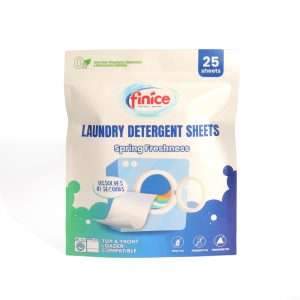
Laundry detergent sheets are becoming a more visible format in modern laundry aisles, e-commerce stores and private-label portfolios. For retailers, distributors and cleaning-product brands, the opportunity is not simply to add another eco-positioned SKU. A successful range needs the right product proposition, dependable manufacturing, clear pack architecture, credible claims and a supply plan that supports repeat purchase.

Recent category signals point to stronger retail interest in laundry sheets, particularly in private label, club and value-led formats. Industry coverage also highlights a continuing focus on compact logistics, pre-measured dosing, cold-water performance and packaging differentiation. citeturn548572search0turn548572search1turn548572search4
Start With a Clear Retail Position
Before requesting samples or quotations, decide where the product will sit in your assortment. A retailer may need an entry-price everyday detergent, a premium fragrance-led line, a sensitive-skin option, a travel-friendly pack or a refill-focused sustainable product. Each position changes the formula brief, package count, claims, price target and expected margin.
| Retail position | Typical buyer priority | Product decisions |
|---|---|---|
| Value everyday | Cost per wash and reliable supply | Simple pack, core fragrance, efficient dosing |
| Premium eco | Performance plus sustainability story | Upgraded packaging, stronger sensory experience, supporting documentation |
| Sensitive care | Ingredient transparency and gentle positioning | Fragrance-free or low-fragrance direction, careful claims review |
| Travel and convenience | Compact size and portability | Small pack counts, moisture protection, clear usage instructions |
Defining this position early helps suppliers quote comparable products instead of presenting unrelated formulas at different price points.
Evaluate Performance Before Packaging
The strongest packaging cannot rescue a weak wash experience. Request samples and establish a simple internal test protocol covering the conditions your customers are likely to use. At minimum, compare dissolution, cleaning performance, residue, fragrance and sheet consistency.
- Test hot, warm and cold-water cycles where relevant.
- Check whether the sheet dissolves fully during short and standard programs.
- Evaluate common household soils such as food, body oils and everyday dirt.
- Review performance at the recommended dose rather than over-dosing.
- Compare samples from more than one production batch when possible.
- Inspect the sheet for sticking, brittleness, moisture pickup and edge damage.
For B2B sourcing, ask the manufacturer to explain its testing process and provide the specific reports that apply to the selected formula. Do not treat a general capability statement as proof that every SKU has the same results.
Finice provides laundry detergent sheet manufacturing and customization support for brands that need private-label packaging, formula development and export-oriented production. See the laundry detergent sheets manufacturer page for more information.
Build the Range Around Consumer Use Cases
A common mistake is launching too many variants before demand is proven. A more practical approach is to create a focused range with clear roles. For example, a retailer might begin with a core everyday SKU, one fragrance-led SKU and one sensitive-care SKU. Distributors may prefer a smaller number of universal products that can work across several customer accounts.
Core SKU
The core SKU should be the easiest product to understand and reorder. It normally carries the broadest audience, the clearest dosage message and the most predictable replenishment pattern.
Premium or fragrance SKU
A premium fragrance product can increase perceived value, but the fragrance should be stable through storage and aligned with the target market. Avoid vague claims such as “long-lasting” unless the wording is supported by your own testing and approved for the destination market.
Sensitive-care SKU
Sensitive-care products require careful wording. Buyers should review ingredients, fragrance allergens, testing documents and local claim requirements before using terms such as “hypoallergenic,” “for sensitive skin” or “dermatologically tested.”
Make Packaging Work for the Shelf and the Warehouse
Packaging has two jobs: help the shopper choose the product and protect the sheets through storage and distribution. Retail buyers should evaluate pack size, opening method, moisture protection, barcode placement, carton configuration and pallet efficiency together.
- Use a front panel that explains the format in seconds.
- Show the number of washes only when the dosing assumption is clear.
- Include usage instructions that are readable in the destination language.
- Check that packaging protects the sheets from humidity during transport.
- Confirm case pack, carton dimensions and pallet pattern before final approval.
- Keep sustainability claims specific and supportable.
In many channels, a smaller and lighter pack can create logistics advantages, but those benefits must be balanced against shelf visibility and consumer value perception. A retail buyer should compare not only unit price but also cost per wash, cube, freight profile and expected repeat purchase.
Review Compliance and Documentation Early
Compliance should be part of product development, not a final packaging step. The exact requirements depend on the countries where the product will be sold and the claims used on the label. Depending on the market, buyers may need safety data, ingredient information, technical specifications, packaging information, test reports and claim substantiation.
European detergent products are subject to specific regulatory obligations, while environmental claims and packaging statements may be assessed under separate rules. In the United States, buyers may also review ingredient disclosure, state requirements and retailer-specific standards. Official guidance from the European Chemicals Agency and the U.S. EPA can help teams identify the right compliance questions, but a supplier should still explain which documents it can provide for the selected formula. citeturn258280search1turn258280search3
Do not assume that “biodegradable,” “plastic-free,” “compostable” or similar language is interchangeable. Confirm exactly what the claim refers to: the detergent formula, the film, the carton, the entire pack or a specific test condition.
Compare Suppliers With a Weighted Scorecard
Price matters, but it should not be the only decision criterion. A simple weighted scorecard can make supplier comparisons more objective.
| Evaluation area | Questions to ask |
|---|---|
| Formula performance | Does the product meet the target cleaning, dissolution and fragrance brief? |
| Customization | Can the supplier support OEM, ODM, private-label packaging and market-specific changes? |
| Quality control | How are raw materials, in-process production and finished goods checked? |
| Documentation | Are SDS, specifications, test reports and claim-support documents available? |
| Supply reliability | What are the lead times, production constraints and reorder process? |
| Commercial fit | Do MOQ, payment terms, packaging costs and logistics fit the business model? |
Retailers should also ask what happens when a raw material changes, a packaging component is unavailable or a production batch falls outside the agreed specification. A clear change-control process is a sign of a more mature supplier relationship.
Plan MOQ, Forecasting and Replenishment
MOQ should be evaluated against sell-through, not treated as a standalone number. A low MOQ can help with market testing, while a larger run may improve unit economics for a proven SKU. The correct decision depends on forecast confidence, shelf coverage, campaign timing, packaging commitments and working capital.
Before placing the first order, estimate:
- Expected monthly sales by channel
- Launch inventory and safety stock
- Lead time from purchase order to delivery
- Seasonal demand and promotional peaks
- Number of variants sharing the same packaging components
- Acceptable stockout risk
Ask the supplier whether formula MOQ, film MOQ, printed packaging MOQ and finished-goods MOQ are calculated separately. This distinction can materially affect the true launch quantity.
Use Claims That Support Conversion
Clear product education is especially important because some shoppers are still unfamiliar with laundry sheets. The packaging and product page should explain how to use the sheet, how many loads the pack supports under the stated dosing assumption, whether the product is designed for cold-water use and how it should be stored.
For B2B customers, the product page should also make the commercial offer easy to understand. Explain whether Finice supports custom fragrance, private-label packaging, OEM/ODM development, sample review, quality inspection and export documentation. Direct buyers to the Finice contact page to request a product brief or quotation.
Frequently Asked Questions
What should a retailer ask a laundry detergent sheets manufacturer first?
Start with the formula brief, target market, package format, expected order size, compliance documents and test method. These details help the manufacturer recommend a product that is commercially relevant rather than simply quoting a generic item.
Are laundry detergent sheets suitable for private label?
Yes. The format can support private-label customization across formula direction, fragrance, sheet count, packaging artwork and carton configuration. The exact options depend on the supplier’s equipment and material availability.
How can buyers reduce the risk of dissolution complaints?
Request testing under the wash conditions relevant to your market, review moisture protection and validate samples from multiple batches before a full launch.
Should a new brand launch many fragrances?
Usually, a focused launch is easier to forecast and replenish. Add variants after the core product has demonstrated demand and the supply chain is stable.
Conclusion
A competitive laundry detergent sheets range is built through coordinated decisions about positioning, performance, packaging, compliance and replenishment. Retailers and distributors should compare suppliers on total commercial fit rather than the lowest initial quotation. A manufacturer that can support customization, documentation, quality control and stable export supply can help reduce launch risk and create a better foundation for repeat orders.
If you are sourcing laundry detergent sheets for a private-label, wholesale or retail program, contact Finice with your target market, pack format, formula direction and forecast. The team can help you evaluate suitable OEM/ODM options and prepare a practical product brief.