Private label laundry detergent sheets are becoming an attractive category for supermarket groups, distributors, e-commerce sellers and household-care brands that want a lighter, more convenient and sustainability-oriented laundry format. However, launching a successful line requires more than putting a logo on a pouch. Buyers need a clear product position, reliable sheet performance, suitable packaging, documented quality controls and a supply partner that can support repeat production.
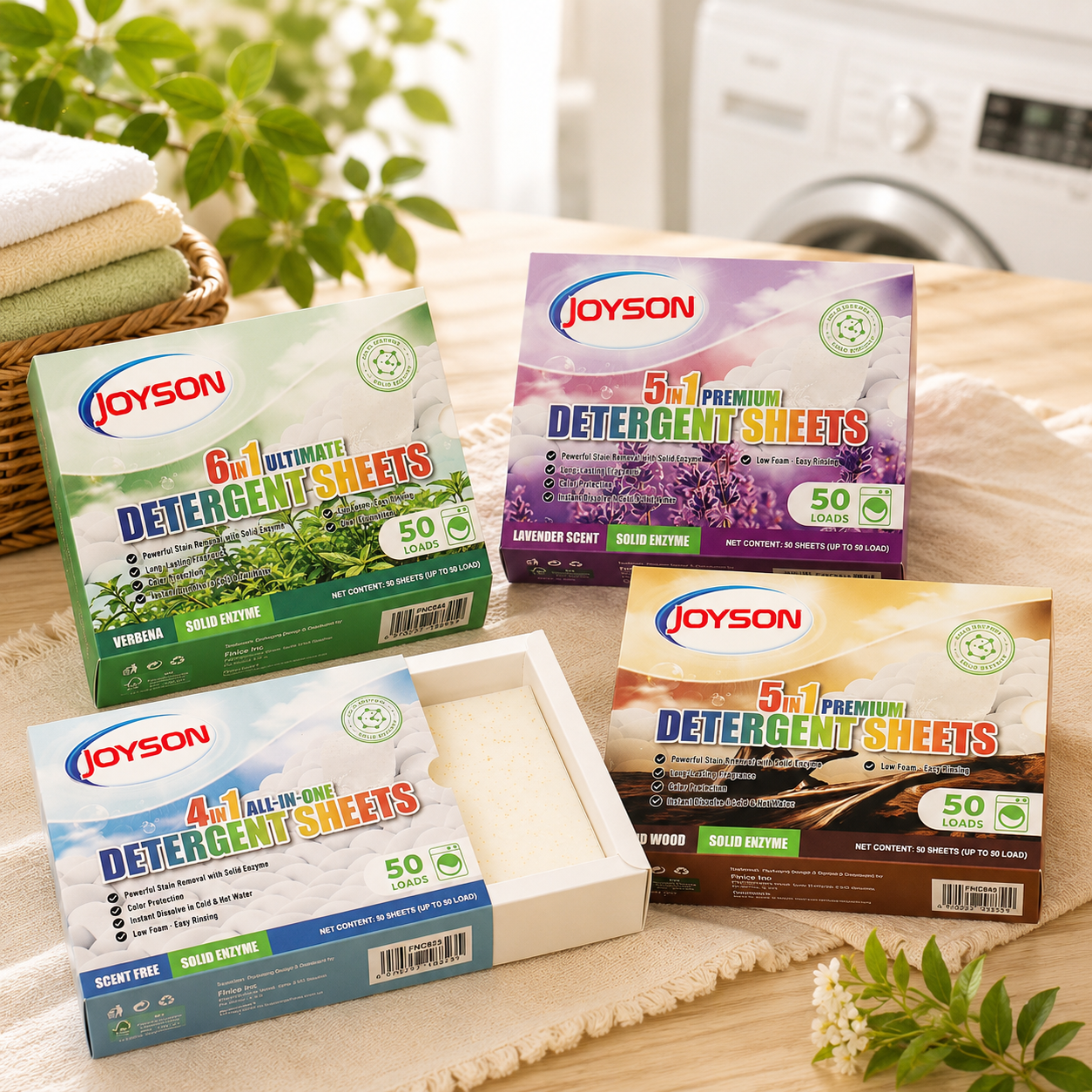
This guide explains the practical decisions behind a retail-ready private label laundry detergent sheets range and shows how B2B buyers can reduce sourcing risk from the first sample to ongoing replenishment.
1. Start With the Retail Role of the Product
Before discussing formula details, define what role the product will play in your assortment. A supermarket may need an entry-level everyday detergent, a premium eco line, a sensitive-skin option, a fragrance-led product or a compact travel-friendly format. Each position changes the formula, packaging, claims, price architecture and expected order volume.
| Retail position | Typical priorities | Questions for the supplier |
|---|---|---|
| Value | Cost per wash, simple packaging, stable supply | What is the recommended dosage and pack configuration? |
| Premium eco | Ingredient story, design, fragrance, supporting documentation | Which claims can be supported by test data? |
| Sensitive care | Fragrance-free or low-allergen direction, clear labeling | What ingredient and allergen documents are available? |
| E-commerce | Compact shipping, attractive unboxing, low damage risk | How is packaging tested for transport and humidity? |
Write down your target market, retail price, number of loads, fragrance direction, machine compatibility, packaging size and launch channel before requesting quotations. This makes supplier comparisons more meaningful because every factory is pricing the same product brief.
2. Define the Core Product Specification
A private label product line should begin with a written specification rather than a generic request for “detergent sheets.” At minimum, define:
- Target dosage per wash and number of loads per pack
- Sheet dimensions, thickness and tear strength
- Fragrance profile or fragrance-free requirement
- Performance expectations in cold and warm water
- Packaging format, pack count and moisture protection
- Target markets and required language or labeling formats
- Preferred claims, such as compact, pre-measured or plastic-reduced packaging, only where supportable
Sheet products can look similar while behaving differently in storage and use. Your specification should therefore include both consumer-facing requirements and factory-control requirements.
3. Validate Cleaning Performance and Dissolution
Retail buyers should test the product at the recommended dosage, not only in ideal laboratory conditions. A practical evaluation can include common household stains, different water temperatures, full-load washing, residue checks and fragrance performance after drying.
Key checks include:
- How quickly the sheet dissolves in the intended wash conditions
- Whether any visible residue remains on clothing or inside the machine
- Cleaning consistency between sample batches
- Performance at the stated dosage rather than an excessive amount
- Stability after exposure to normal transport and warehouse conditions
Finice describes testing areas such as cleaning efficacy, active content, foam strength, pH, stability and solubility. B2B buyers should request the specific reports and acceptance criteria for the chosen formula instead of relying on broad marketing language. You can also review the laundry detergent sheets manufacturer page for more information about product development and manufacturing support.
4. Choose the Right Formula Direction for the Market
Current industry discussions continue to emphasize low-temperature washing, compact formats, sustainability communication and private label expansion. These themes create opportunities, but they should not become unsupported claims. A buyer should ask the manufacturer how the formula is designed for the target market and what evidence is available.
Cold-water and low-temperature use
If your customers commonly wash at lower temperatures, ask for dissolution and performance testing under the relevant conditions. Do not assume that a sheet optimized for warm water will deliver the same result in every cold cycle.
Fragrance and sensitive-care options
Fragrance-led products can create a strong point of differentiation, while fragrance-free or reduced-fragrance products may suit sensitive-care positioning. Review ingredient disclosure, allergen information and labeling requirements before finalizing the range.
Buyers should understand the film and binder system used in the sheet, the supplier’s solubility testing method and any market-specific documentation needed for the finished product. Avoid using environmental wording that cannot be explained or verified.
5. Build Packaging Around Retail and Logistics Requirements
Packaging protects the sheets from humidity, supports shelf presentation and affects shipping cost. A successful private label package should balance moisture resistance, pack integrity, visual differentiation and practical handling in warehouses and stores.
Discuss whether your launch needs a paper-based carton, a pouch, a refill format, a display-ready case or multiple pack sizes. Ask the supplier about seal strength, inner protection, carton configuration, barcode placement and drop or transport testing. If the product will be sold through e-commerce, test parcel handling separately from palletized retail transport.
Packaging artwork should also leave enough space for required product information, directions, warnings, ingredients and market-specific language. A good OEM partner can help coordinate packaging specifications without taking responsibility for claims that belong to the brand owner or importer.
6. Review Quality Control From Raw Material to Finished Goods
Supplier quality is not proven by a sample alone. Buyers should understand how the manufacturer controls incoming materials, in-process production, sheet cutting, moisture exposure, packaging and final release.
Useful questions include:
- How are raw materials identified and approved?
- What checks are performed during sheet formation and cutting?
- How are lot numbers and retain samples managed?
- What is the process for handling non-conforming batches?
- Can the supplier support pre-shipment inspection or third-party testing?
- How are formula or packaging changes communicated?
For retailers and distributors, consistency between the first order and replenishment orders is especially important. A documented quality process helps protect reviews, shelf continuity and customer trust.
7. Confirm Documentation and Market Compliance
International detergent sourcing requires documentation that matches the destination market and the product claims. Depending on the country and channel, buyers may need safety data, ingredient information, technical specifications, test reports, labeling support or importer documentation.
Regulatory expectations are also evolving. The European Union published Regulation (EU) 2026/405 on detergents and surfactants on March 2, 2026, replacing the earlier framework and clarifying several requirements for businesses. Buyers selling into Europe should confirm which obligations apply to their formula, packaging and market role with a qualified regulatory professional. See the UL Solutions overview of the 2026 EU detergents regulation.
Do not treat a factory’s general certification list as a substitute for product-specific compliance review. Ask for documents relevant to the actual formula and destination market.
8. Plan MOQ, Lead Time and Replenishment Together
A low first-order MOQ can be useful for market testing, but the best commercial arrangement is the one that supports repeat supply without creating excessive inventory. Ask the manufacturer to separate the drivers of MOQ, including formula batching, printed packaging, cartons and production scheduling.
Build a simple launch model around expected monthly sales, safety stock, lead time, seasonal demand and the number of SKUs. If you launch too many fragrances or pack sizes at once, you may divide demand across slow-moving items. A smaller core range with clear replenishment data is often easier to scale.
9. Compare Suppliers With a Weighted Scorecard
Price should be one line in a broader scorecard. A practical weighting might include product performance, dissolution, documentation, quality control, packaging capability, communication, MOQ, lead time and landed cost. Give more weight to the factors that directly affect your channel.
For example, a supermarket chain may prioritize audit readiness and replenishment reliability, while an e-commerce brand may place more weight on packaging durability and fast sample iteration. The scorecard should be completed after reviewing samples, documents and commercial terms—not before.
10. Use OEM and ODM Support to Build a Range
OEM means producing to your established specification and brand requirements. ODM usually involves more formulation and product-development support from the manufacturer. In practice, many private label projects use a combination of both: the buyer sets the market position and brand direction while the factory adapts formula, fragrance, pack size and packaging details.
Finice supports private label and custom development for household cleaning products. Buyers can connect a laundry detergent sheets project with complementary products such as fragrance enhancers, fabric softener sheets, color absorber sheets and dishwashing sheets to build a broader household-care assortment.
Frequently Asked Questions
What is the first document I should send to an OEM supplier?
Send a concise product brief covering target market, pack size, load count, fragrance direction, packaging format, claims, expected volume and required documents.
Should I start with one SKU or several?
For most new launches, one core SKU or a small controlled range makes testing, inventory planning and feedback collection easier.
How can I compare two similar samples?
Use the same wash loads, water temperature, dosage, stain types and evaluation criteria. Compare both performance and storage behavior.
Can a supplier guarantee Google or retail success?
No. A manufacturer can support product development, documentation and supply, but commercial success also depends on pricing, positioning, distribution, marketing and customer experience.
Conclusion: Turn a Product Idea Into a Repeatable Retail Program
A private label laundry detergent sheets line succeeds when product performance, packaging, compliance and supply planning work together. The strongest sourcing process starts with a clear retail position, validates dissolution and cleaning performance, reviews the formula and documentation, and selects a supplier that can support both launch quantities and repeat production.
If you are planning a private label laundry detergent sheets project, contact Finice to discuss OEM/ODM development, packaging customization, product testing and wholesale supply options for your target market.