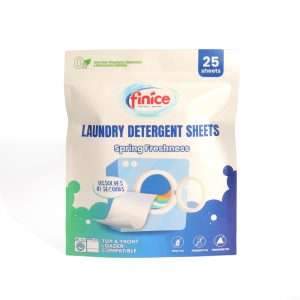
A finished laundry sheet order should be checked against an approved product record, not just against a photograph in an email. Incoming inspection links the delivered lot to the formula, packaging and directions the buyer intended to purchase.
For importers and private label brands, a short, consistent record can make a discrepancy easier to investigate. The workflow below is a practical quality-planning example. Agree the inspection method, sample selection and acceptance rules with your supplier before the order arrives.

Build the reference file before shipment
Collect the purchase order, product specification, approved artwork, packaging version and sample approval record. Identify a retained reference sample by date and version. If a fragrance, size or packaging change was approved later, make sure the receiving team has the final version.
Define what constitutes the inspection lot. One shipment may contain several production batches or product variants. Keeping those distinctions visible is more useful than treating every carton in a container as identical.
Record the delivery before opening samples
Note the receiving date, shipment reference, carton count and visible transport condition. Photograph damaged or wet cartons in context and retain the shipping identification. Record where the inspected cartons came from rather than selecting only the easiest boxes to reach.
A photograph of external damage documents a condition; it does not by itself establish the cause or the condition of every unit. Keep observations separate from conclusions until the supplier and buyer review the evidence.
Use a consistent inspection record
| Check | Reference | Record at receipt |
|---|---|---|
| Identity and version | Approved product specification | SKU, fragrance, formula reference where available and pack version |
| Traceability | Agreed batch coding approach | Batch codes and link to the shipment |
| Quantity | Purchase order and count definition | Cartons, packs and checked sheet counts |
| Packaging | Approved finished pack | Closure, seal, print and handling condition |
| Sheet condition | Retained reference and specification | Appearance, separation and agreed physical checks |
| Directions and labels | Final artwork approval | Dose, language, version and legibility |
| Use performance | Agreed evaluation method | Conditions, results and any deviation |
Keep counting definitions consistent
A perforated section is not necessarily the same unit as a full sheet. Use the definition agreed in the purchase order when checking quantity. If receiving staff and the supplier use different definitions, resolve that mismatch before classifying the result as a shortage.
For a detailed artwork review, see our guide to laundry sheet count and stated wash loads. It separates physical sheets, usable sections and dose-based wash counts.
Repeat performance checks under agreed conditions
If the inspection includes washing tests, use the method established during sample approval. Keep the machine, dose, fabrics, soils and water conditions consistent enough to support a meaningful comparison. Record any unavoidable difference instead of hiding it.
Our cold-water sample checklist can help organize an initial evaluation. An arrival test should refer to the approved method and criteria; it should not introduce a new pass limit after results are known.
Separate a hold from a final rejection
When a discrepancy appears, identify and hold the affected stock according to your agreed process. Keep the lot reference, photographs, measured results and sample units available. Describe the defect specifically: missing sheets, unreadable batch code and damaged closure require different investigations.
Agree who can release stock and what evidence is needed after a correction. Do not blend questioned units into saleable inventory while the decision is unresolved. If the issue affects a product claim or safety instruction, route it to the responsible quality or compliance specialist.
Retain samples and close the record
Label retained samples with the product, batch, receipt date and inspection reference. Store them under the agreed conditions and retention approach. Record the final decision, any corrective action and who approved it so the next order benefits from the findings.
Track recurring issues by type and batch rather than relying on memory. A repeated printing or closure problem may need a specification or process change even when individual cases have been resolved.
Agree the acceptance process before ordering
Review Finice laundry sheet manufacturing options and share your inspection and traceability requirements with the sample request. Early agreement on reference samples, count definitions and records makes the final handover easier to assess.
Is there one sample size suitable for every order?
No. The plan depends on the lot, risks and agreed inspection approach. Specify it before inspection with the responsible quality team instead of choosing an arbitrary number after the shipment arrives.