A useful laundry sheet reference sample archive preserves the exact approved product, its packaging and the conditions under which it was kept. A loose sheet in an office drawer cannot reliably settle a later question about a production batch. For private label buyers, the aim is a traceable comparison reference, not a substitute for the written specification.

Separate the working sample from the sealed reference
The working sample is opened for demonstrations or routine discussion. The reference remains in its agreed packaging until a documented reason requires opening it. Where practical, agree matching retained units with the supplier so both parties can identify the same approved version.
Record whether the sample came from development, a pre-production run or saleable production. These stages are not interchangeable. A development sample may demonstrate a proposed format without representing the final manufacturing or packaging conditions. Keep the approval email and specification revision linked to the physical sample code.
| Record | What to capture | Why it matters |
|---|---|---|
| Identity | SKU, fragrance, sample code and specification revision | Prevents comparison with the wrong version |
| Origin | Batch or sample reference and received date | Distinguishes development and production material |
| Packaging | Pack type, seal condition and photographs | Shows the state in which the reference arrived |
| Storage | Supplier instructions, location and recorded deviations | Makes later observations interpretable |
| Withdrawal | Who opened it, when, why and what remained | Stops an opened sample being mistaken for an untouched reference |
Agree storage and retention rather than inventing a rule
Ask the supplier for the applicable storage instructions and agree a retention period that serves your quality process. Do not choose an arbitrary temperature, humidity or number of years and describe it as a universal requirement. If an archive location falls outside the agreed conditions, record the event and assess whether the sample still serves its intended purpose.
Keep references clearly identified and inaccessible to children. The American Cleaning Institute’s laundry safety guidance advises following labels and closing containers after use. A sample archive needs the same disciplined handling; it is not an invitation to decant detergent into an unlabelled container.
What can a retained sample resolve?
It can help establish which appearance, sheet format or package version was approved. It cannot by itself prove that a later shipment meets every requirement. A change in an old sample also does not automatically prove a new production defect: age, packaging and storage history must be considered.
When opening a reference, photograph its condition before removing material. Define the comparison question and preserve any remaining sample with the updated opening record. For checks at receipt, use the separate incoming inspection checklist.
Build the archive into your next sample request
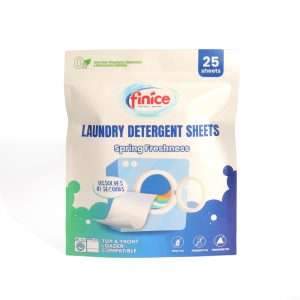
Explore the Finice laundry sheet range and request samples and a quotation with your target market, proposed pack and approval process. Ask which sample identifiers, storage guidance and matching references can be supplied for that specific project.