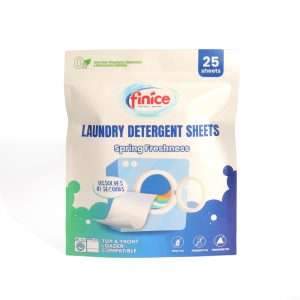
Plan laundry sheet reorders by comparing each SKU’s usable stock with expected demand during the confirmed replenishment period. Keep reserved, damaged and inspection-held units separate. A large total across the range can hide a shortage in the fragrance or pack size customers actually order.

Build a consistent inventory snapshot
Use the same unit throughout the calculation: retail packs, not a mixture of cartons and individual sheets. Record the snapshot date and distinguish physical stock from inbound purchase orders. An order that is still awaiting production is not stock available to fulfill today’s customer orders.
| Input | Meaning in this worksheet | Common correction |
|---|---|---|
| Usable stock | Units available after holds and reservations | Remove damaged or allocated units |
| Demand rate | Expected retail packs per day | Use the same SKU and period |
| Replenishment time | Time until stock can be used by the warehouse | Include receiving, not just factory production |
| Buffer | Additional stock chosen for uncertainty | State the assumption explicitly |
| Inbound units | Confirmed open orders and expected receipt dates | Do not count an unconfirmed date as guaranteed |
A simple stock-cover example
These figures are illustrative and are not Finice order requirements. Suppose one SKU has 1,200 usable packs and expected demand of 40 packs per day. Its simple stock cover is 1,200 ÷ 40 = 30 days. If confirmed replenishment takes 35 days, a new order arriving on that timeline would leave an estimated five-day gap under constant demand.
A basic reorder threshold can be expressed as expected demand during replenishment plus a chosen buffer. With 40 packs per day, 35 days and a 200-pack buffer, the threshold is 1,600 packs. This example assumes no usable inbound stock and stable demand; it is a planning rule, not a guaranteed service-level calculation.
Adjust the forecast before placing the order
Separate routine demand from a promotion, a new retailer opening or a one-off bulk order. Review recent stockouts too: sales recorded during an unavailable period may understate what customers would have bought. Document adjustments rather than silently replacing the observed sales rate.
Evaluate each variant before combining the order. A slow-selling fragrance does not compensate for a shortage in another fragrance unless customers actually accept substitution. Ask the supplier to confirm feasible quantities by variant and whether changes to the mix affect timing or quotation.
What if projected stock runs out before delivery?
First verify the inputs and inbound dates. Then discuss feasible options with the supplier and your sales team: an adjusted launch allocation, a revised order mix or a different confirmed delivery plan. Do not promise an expedited shipment or substitute product until the relevant parties agree.
Prepare the next purchase enquiry
Send Finice the SKU references, current pack specification, quantity by variant and required receipt dates. Link the request to the agreed retail-unit and carton hierarchy so both teams count the same units. Ask for current availability and replenishment milestones before converting the worksheet into a purchase order.