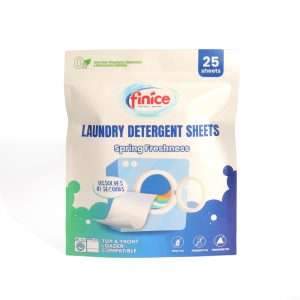
When a laundry sheet is returned, capture what happened before deciding why it happened. A photograph of residue, damaged packaging or an unexpected appearance is useful evidence, but it rarely identifies the cause on its own. A consistent intake record helps customer service and the supplier investigate the same issue.

Ask for a short, relevant evidence set
Start with the product name, pack version, batch code if available and purchase channel. Record whether the pack was opened, used or damaged on arrival. Ask for an overall photograph and a close-up of the reported issue, keeping the product code legible.
Request only information needed for the investigation. Avoid collecting personal details or unrelated photographs of the customer’s home. Do not ask a customer to repeat a use that caused a safety concern. Route those reports promptly through the appropriate safety process rather than treating them as an ordinary satisfaction survey.
| Reported issue | Helpful details | Conclusion to avoid |
|---|---|---|
| Visible sheet residue | Dose, loading method, cycle, water conditions if known | The formula is defective based on one photo |
| Weak cleaning | Load description, soil type and directions followed | More detergent is always the answer |
| Damaged retail pack | Delivery condition and outer packaging photos | The customer caused it |
| Unexpected scent or appearance | Exact variant, batch and storage history | Every difference is normal |
| Wrong product received | Order reference and label images | The manufacturing batch is wrong |
Keep observations and explanations in separate fields
Write “white material visible on dark fabric after the cycle” as the observation. Put proposed explanations in a separate investigation field and identify what evidence would distinguish them. This prevents an early guess from becoming an apparent confirmed finding as the report moves between teams.
Ask whether the product and garment directions were followed without framing the question as blame. The American Cleaning Institute’s laundry product guidance emphasizes the product label and fabric care instructions. Those directions provide a reference for reviewing use conditions; they do not justify dismissing a complaint automatically.
Escalate patterns, not just individual stories
Group reports by SKU, batch and issue type, preserving their original detail. Compare counts with sales or shipment data only when the populations match. A rise in reports may reflect increased sales, a change in reporting or a product issue; investigate before assigning a cause.
If a returned sample is needed, arrange suitable handling with the supplier. Identify opened and unused material separately. A retained reference may help the review, but the physical return and its handling history still matter.
Close the loop with a recorded outcome
Document the finding, remaining uncertainty and action taken. Do not use a corrective action as proof that the suspected cause was confirmed. Feed supported findings into the supplier feedback brief so future changes address evidence rather than anecdotes.
For a new project, browse Finice laundry sheets and request samples and a quotation. Ask who handles product enquiries and which traceability details should accompany any later quality report.