A strongly fragranced dryer sheet can make a good first impression without answering the buyer’s most important questions. Does the treated fabric feel right? Is static reduced under the intended conditions? Can users remove one sheet from the pack and follow the directions easily?
Private label sample approval becomes clearer when softness, static and fragrance are scored separately. Each outcome can influence the product brief, and a high score in one area should not hide a weakness in another.

Choose the product promise before choosing a favorite
Decide which benefits matter to the target customer. A fragrance-led range and a restrained everyday fabric-care range may need different briefs. State the intended fabrics, dryer type and consumer dose, and identify restrictions that must appear in the directions.
The American Cleaning Institute identifies dryer sheets as one way to help address static cling. That general use does not establish a quantified performance claim for a particular formula. Ask for evidence tied to the actual candidate.
Use separate scorecards for separate outcomes
| Outcome | Buyer question | Common comparison mistake |
|---|---|---|
| Softness | How does the dried fabric feel against the agreed reference? | Allowing fragrance preference to influence the answer |
| Static | What difference is observed under controlled conditions? | Changing fabric mix or drying conditions between trials |
| Fragrance | Is the intensity and character appropriate after drying? | Selecting only from the smell of the open pack |
| Appearance | Are marks or other unwanted changes observed? | Inspecting only the easiest fabric to assess |
| Handling | Can users separate and place the intended dose? | Testing a loose sample but not the finished pack |
Keep the laundry history consistent
Prepare equivalent fabric sets using the same detergent and washing procedure. Avoid comparing a candidate on previously softened fabrics with a control prepared differently. Record the fabric types, load, dryer program, dose and drying endpoint.
Include an untreated control and, if useful, a retained reference product. Repeat the comparison. For claims that will appear on packaging, work with the responsible technical team to choose a suitable test method rather than treating an informal handling exercise as a certification.
Separate sensory preference from measured performance
Use neutral sample codes for the softness and fragrance review. Ask assessors to record their impressions individually before discussing the samples. Describe the rating scale in ordinary terms so everyone uses it consistently.
Keep static assessment conditions documented. If the team cannot produce a meaningful and repeatable static comparison, report that limitation instead of selecting a convenient result. An inconclusive trial is a reason to improve the evaluation, not to invent a percentage reduction.
Check fabric restrictions before artwork approval
Read the candidate’s directions alongside garment and appliance guidance. Do not market a sheet as suitable for every textile solely because it worked on one cotton sample. Where a particular fabric property matters to the buyer, include that property in the agreed evaluation.
Confirm how the instructions explain placement, dose and disposal. Any additional use, such as putting the sheet into a cupboard or another appliance, requires its own suitability assessment; it should not be added casually to expand the marketing copy.
Approve the pack as well as the sheet
Try removing a sheet from the proposed box or pouch using the consumer directions. Note sticking, tearing, multiple sheets coming out together and unclear dose illustrations. Compare the final pack with the sample used for the performance review.
Record the approved sheet version, fragrance, size, pack count and artwork. Ask how later changes will be communicated. The purchasing specification should connect the physical product to the exact claims and instructions approved for sale.
Make your sample request specific
Send your target market, customer profile, intended fabrics and priority benefits when requesting samples. Include the proposed pack format and the evidence required before you can approve a claim.
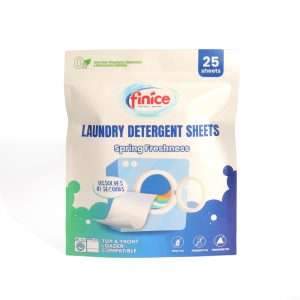
Browse Finice’s fabric-care product range and request dryer sheet samples for a defined evaluation. Reviewing the benefits separately gives both buyer and manufacturer a more useful basis for product development.