Maintaining the highest standards of cleanliness in cleanrooms is essential across a wide range of industries, from pharmaceuticals and food production to semiconductor manufacturing. However, the challenge extends far beyond simply following standard operating procedures. Even the smallest contamination event can compromise product integrity, while strict regulations, pathogen risks, continuous monitoring requirements, human error, labor shortages, and the need to minimize downtime all create ongoing operational challenges.
So, how can organizations optimize their cleaning strategies while ensuring regulatory compliance? From data-driven cleaning processes to intelligent ergonomic equipment and robotic automation, emerging technologies are redefining safe, efficient, and sustainable cleanroom operations.
Reducing Downtime and Operating Costs
When contamination occurs, production must often be temporarily halted. For large and complex cleanrooms, even a short interruption can result in losses worth tens of thousands of pounds. This makes efficient cleaning solutions more important than ever.
By adopting advanced cleaning methods and mechanical solutions, facilities can resume production more quickly and significantly reduce operational costs.
Cleaning teams play a critical role in minimizing downtime by strictly following standardized procedures. Advanced training programs, such as Virtual Reality (VR) simulations, allow employees to practice proper cleaning techniques in controlled environments. Meanwhile, smart ergonomic tools with built-in guidance systems help reduce human error. In some high-tech cleanrooms, automated systems provide real-time feedback on cleaning performance, ensuring that no critical areas are overlooked.
Proactive Regulatory Compliance
Airborne particle contamination remains one of the biggest challenges for every cleanroom. ISO 14644 serves as the cornerstone of cleanroom standards by classifying air cleanliness according to airborne particle concentration.
Each ISO cleanroom classification specifies the maximum allowable number of particles per cubic meter of air. Combined with other regulations such as Good Manufacturing Practice (GMP), these standards ensure effective contamination control, validated cleaning procedures, and standardized workflows.
However, compliance is much more than simply meeting existing standards. Organizations are increasingly adopting proactive strategies, including real-time monitoring systems and standardized cleaning protocols. Emerging technologies such as automated validation and digital documentation help companies stay ahead of evolving regulatory requirements.
Some manufacturers have already integrated real-time particle counting technology directly into their cleaning workflows, enabling continuous verification of ISO cleanroom compliance.
Minimizing Inconsistencies
In already demanding environments, cleaning equipment should simplify operations rather than add complexity.
Traditional cleanroom floor cleaning relies heavily on manual wiping and mopping, which are labor-intensive, time-consuming, and often produce inconsistent results. More importantly, these methods increase the risk of cross-contamination, leading to extended downtime and production delays.
Powerful mechanical scrubbers equipped with Ultra-Low Penetration Air (ULPA 15) filtration systems remove more embedded particles than manual methods, capturing over 99.999% of contaminants as small as 0.1 microns.
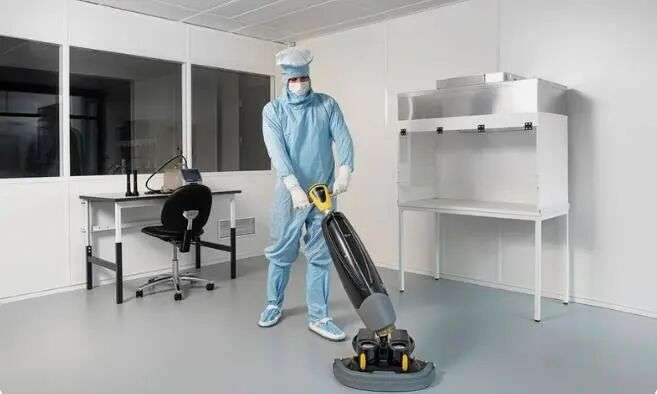
Lightweight, battery-powered cleaning machines with ergonomic designs and intuitive controls improve both operator comfort and productivity. These sustainable solutions also reduce disposable mop waste while lowering water and chemical consumption. Without power cords or the need to locate electrical outlets, preparation time is minimized, further increasing operational efficiency.
Fast charging capabilities are equally important. Some machines feature built-in non-removable batteries that require long charging periods after being plugged into wall outlets. In contrast, cleaning equipment with interchangeable battery systems allows continuous operation, as depleted batteries can be replaced immediately while spare batteries recharge simultaneously.
Preventing Cross-Contamination
Cross-contamination is particularly critical in high-traffic transition areas such as changing rooms and airlocks. Studies have shown that these floor surfaces are often among the most contaminated areas within a cleanroom, yet they are sometimes overlooked in contamination control strategies.
Maintaining optimal cleanroom performance begins with clearly defined cleaning procedures and dedicated equipment for each zone. Automated disinfection tools provide additional protection in transition areas, while upgraded filtration systems help reduce airborne contamination risks.
Routine maintenance—including filter replacement and equipment inspection—is equally essential. Many facilities are now going a step further by implementing antimicrobial surface coatings and UV disinfection passages to provide additional layers of protection.
Reducing Risks Associated with Human Activity
Research indicates that approximately 80% of cleanroom contamination originates from human activity. Therefore, removing dust, airborne particles, and other contaminants from personnel before they enter the cleanroom is essential.
Automated decontamination technologies installed in entry points and gowning rooms significantly reduce contamination risks. Solutions such as air showers and sticky mats effectively remove particles before personnel enter controlled environments.
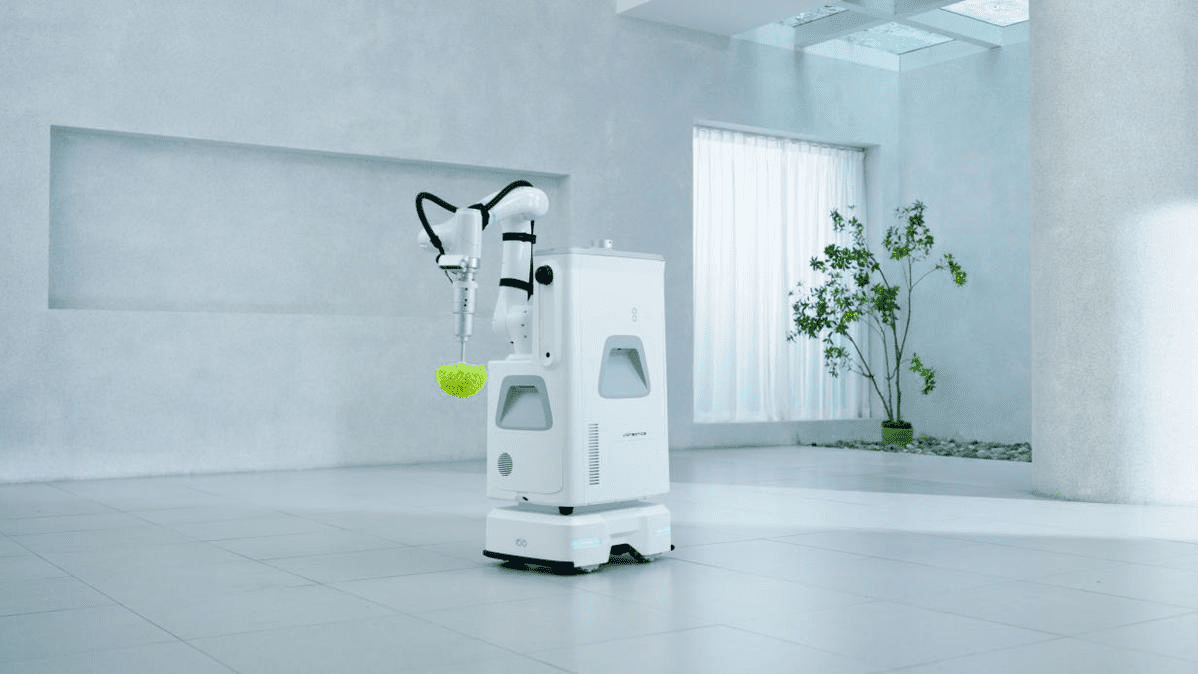
The fewer people present within controlled cleaning areas, the lower the contamination risk. Automated cleaning solutions designed specifically for cleanrooms deliver efficient and precise contamination control. These systems can be programmed to follow predetermined cleaning schedules and operate autonomously, minimizing disruption to daily operations.
Enhanced Filtration Performance
Equipment equipped with advanced filtration systems helps minimize airborne contaminants that could otherwise compromise pharmaceutical, cosmetic, or other sensitive products.
Specialized vacuum cleaners feature Ultra-Low Penetration Air (ULPA) filters on both intake and exhaust ports. Their five-layer fabric dust bags, combined with plastic support structures and silicone sealing systems, ensure that captured particles remain securely contained within the machine.
Cross-woven filter media further enhances air purification performance, delivering superior contamination control throughout the cleaning process.
Addressing Labor Shortages and Training Challenges
Cleanroom facilities worldwide face an ongoing shortage of skilled cleaning personnel, a challenge made even more difficult by increasingly stringent regulatory requirements and high employee turnover.
Cleanroom maintenance is physically demanding and often performed in warm environments where every task must follow strict protocols. This highlights the importance of investing in employee training, professional development, and supportive workplace cultures that encourage long-term retention.
Technology also plays an increasingly important role in overcoming these challenges. Many organizations are investing in digital learning platforms that provide interactive step-by-step guidance, significantly reducing onboarding time for new employees.
Others are exploring collaborative robots (cobots) that work alongside cleaning teams, improving cleaning consistency while reducing physical strain on workers.
Future-Proofing Your Cleanroom Strategy
The cleanroom industry is entering a new era of contamination control. Innovative technologies are enabling organizations to prevent contamination more effectively while saving time, reducing costs, and addressing labor shortages.
By integrating automation, real-time monitoring, and intelligent cleaning strategies, businesses can move beyond basic compliance requirements and establish new benchmarks for cleanliness, efficiency, and operational excellence.
Looking ahead, cleanroom cleaning technology will continue to evolve with innovations such as AI-powered contamination prediction, fully autonomous cleaning robots, and even self-disinfecting surfaces. Organizations that embrace these advanced technologies early will not only ensure long-term regulatory compliance but also gain a significant competitive advantage in an increasingly demanding marketplace.