Got stains that won’t budge? Food grease or protein stains or pet accidents that are easy to ignore or don’t get better with traditional cleaners? Are you ready to make them disappear? Then it’s time to buy some enzyme-based cleaner.
What is an enzyme cleaner, and how do enzyme cleaners work?
An enzyme cleaner is a special kind of cleaning product designed with natural enzymes, which are biological molecules that act as catalysts to carry out the break down of complex organic materials. Unlike general-purpose chemical cleaners, which may only help move dirt off a surface, an enzyme cleaner will actually break down and decompose organic matter like food residue, grease, protein and even body fluids. This makes them particularly useful to have on hand if your home is prone to these types of tough, ongoing stains.
But how exactly do they work? These enzymatic cleaning products use their natural properties to help consume the targeted stains and soils, making this residue easily wiped or washed away. Unlike traditional cleaners that contain harsh chemicals, enzyme cleaners work in a more gentle manner, yet produce powerful results.

What is the difference between enzyme cleaners and traditional cleaners?
There are clear differences between enzyme-based cleaners and traditional chemical cleaners. Here’s a quick comparison to highlight the key distinctions:
| Feature | Enzyme-Based Cleaners | Traditional Cleaners |
|---|---|---|
| Main Ingredients | Natural enzymes (proteins that break down organic matter) | Harsh chemicals like bleach, ammonia, and acids |
| Effectiveness on Stains | Highly effective on organic stains (e.g., food, grease, proteins) | General dirt and grime, less effective on organic stains |
| Surface Safety | Safe for most surfaces, including fabric and grout | May damage or discolor sensitive surfaces (wood, fabric) |
| Environmental Impact | Biodegradable, low toxicity, eco-friendly | Can be harmful to the environment; may not biodegrade fully |
| Odor Removal | Removes stains and odors by breaking down odor-causing molecules | Often masks odors temporarily without removing the source |
| Health and Safety | Non-toxic, safe for pets and humans | Can cause skin irritation, respiratory issues, or allergic reactions |
| Long-term Effectiveness | Enzymes continue working after application, providing residual cleaning | Immediate but short-lived effect, may require frequent reapplication |
| Cost | Generally more expensive upfront, but cost-effective in the long run due to fewer applications needed | Typically cheaper upfront, but may require more frequent use and larger quantities |
| Application Time | Requires dwell time (10-15 minutes) for enzymes to fully activate | Immediate action, but may require scrubbing or multiple applications |
With enzyme-based cleaners vs traditional chemical cleaners, the biggest difference comes in the way they work. An enzyme-based approach means they use natural biological processes to break down organic matter at the source. This means that it cleans not only the surface area, but it also helps clean up the odor and reduce the number of repeat cleanings.
For instance, in a commercial kitchen or a food processing plant, enzyme cleaners can break down the grease and food leftovers that would otherwise require you to scrub it hard or reapply dangerous and toxic chemical cleaners many more times. Your chemical cleaner will clean it now, but it doesn’t get it out. It doesn’t get it clean. It is just putting a Band-Aid on it right now, and in a day or two, you are going to have the same problem again if you are not using enzyme-based cleaners.
How effective are enzyme cleaners?
Enzyme cleaners are very effective, particularly for breaking down difficult organic stains that traditional cleaners might struggle with. According to research published by the European Cleaning Journal, enzyme-based cleaners can reduce cleaning time by up to 30% in commercial environments thanks to their ability to break down complex organic materials at the molecular level.
The effectiveness of enzyme-based cleaners for stains isn’t just about speed, though. Enzymes keep working after the initial application too, providing a residual cleaning effect. What that means is that after you perform the initial cleaning, the enzymes keep breaking down organic matter, which is a nice ongoing benefit in places like kitchens, public restrooms, and supermarkets where spills happen all the time because they stay busy.

How environmentally friendly are enzyme cleaners?
Enzyme-based cleaning chemicals are known for being environmentally friendly. They are naturally occurring proteins so enzymes are biodegradable and don’t introduce harmful substances into our water systems. This makes them a lot safer for the environment and they are more environmentally friendly than traditional chemical cleaners.
According to an EPA report, using more environmentally friendly cleaning products (including enzyme cleaners) can reduce the impact of cleaning operations on the environment by as much as 50%. For those enterprises looking to align their cleaning practices with sustainability goals, this could be a huge factor. You’ll still achieve the same results, but you’ll lessen your environmental impact.
For further reading and specific data on the environmental benefits of enzyme cleaners, you can refer to the following sources:
- Environmental Safety of Enzymes – AMFEP
- New Guidance for Professional Applications Using Enzyme-Based Products – American Cleaning Institute
What are the different types of enzyme cleaners?
Different enzymes attack different types of soils. So, depending upon what you are cleaning, here are the three main types of enzyme cleaners:
| Enzyme Type | Best For | Common Uses |
|---|---|---|
| Protease | Protein stains (e.g., food, blood) | Healthcare facilities, restaurants, laundry |
| Lipase | Grease and oil | Kitchens, food processing industries |
| Amylase | Starch-based stains (e.g., sauces) | Bakeries, food service areas |
By selecting the appropriate enzymatic cleaning product, you can optimize your cleaning processes.

How to use enzyme cleaner
Using an enzyme-based cleaner might sound straightforward, but you can get better results if you do it right. And doing it right consists of more than just squirtin’ and wipin’. Here are a few pointers to give yourself the best shot at using enzyme cleaning products the right way:
- Surface Compatibility – While enzyme cleaners are generally safe for just about any surface, it’s always a good idea to test a small area first just to make sure. Some kinds of materials, like untreated wood or some types of fabrics, might need to be treated with a little more care to avoid damage.
- Allow Enough Dwell Time – The most important thing about using enzyme cleaners is to allow the enzymes enough time to do their job of breaking down whatever organic stuff is pissing you off. Unlike chemical cleaners that work almost immediately, enzymes are biological catalysts. They need time to latch onto the proteins, fats, or whatever it is they’re supposed to break down. This means that you might need to allow the cleaner to dwell on the urine stain, feces stain, food stain, blood stain, or whatever set-in stain you might have for 10-15 minutes, based on the recommendation on the bottle for that specific product.
- Avoid Harsh Chemicals Beforehand: Avoid using other harsh chemical cleaners before applying the enzyme cleaner. Residue from strong chemicals can deactivate or neutralize the enzymes, reducing the effectiveness of the enzyme cleaning product. Ensure that the surface is free of such residues to allow the enzymes to work optimally.
By following these tips, you can make sure you’re getting the maximum benefit from enzymatic cleaning products, whether you’re dealing with stubborn food stains, grease, or other organic debris.
Conclusion
Enzyme cleaning products offer a natural, environmentally-friendly alternative to traditional chemical cleaners. They break down organic stains, making them an excellent option for removing the most difficult dirt and odors. Not only are they safe for you and the environment, but they also contain unbeatable cleaning power that lasts a long time.
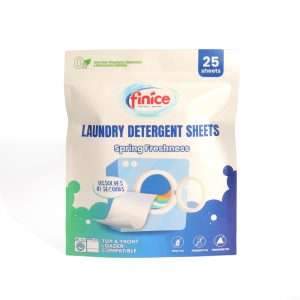
For example, Finice offers a product using this technology with their ECO Friendly-Active Enzyme Laundry Detergent Sheet, providing a solution for sustainable laundry that is both convenient and exceptionally eco-friendly.
Find Out More About Products for Cleaning
Need trusted information on cleaning products and methods for a cleaner home? Read our blog posts for the real deal, not the hype.
Make smart, safe choices for a cleaner, more sustainable lifestyle!